Preserving truth through comprehensive documentation and rare historical materials.
The first pillar is the archive—a living repository that preserves historical records, data, and written materials related to Bhutanese refugees and Bhutan–Nepal relations.
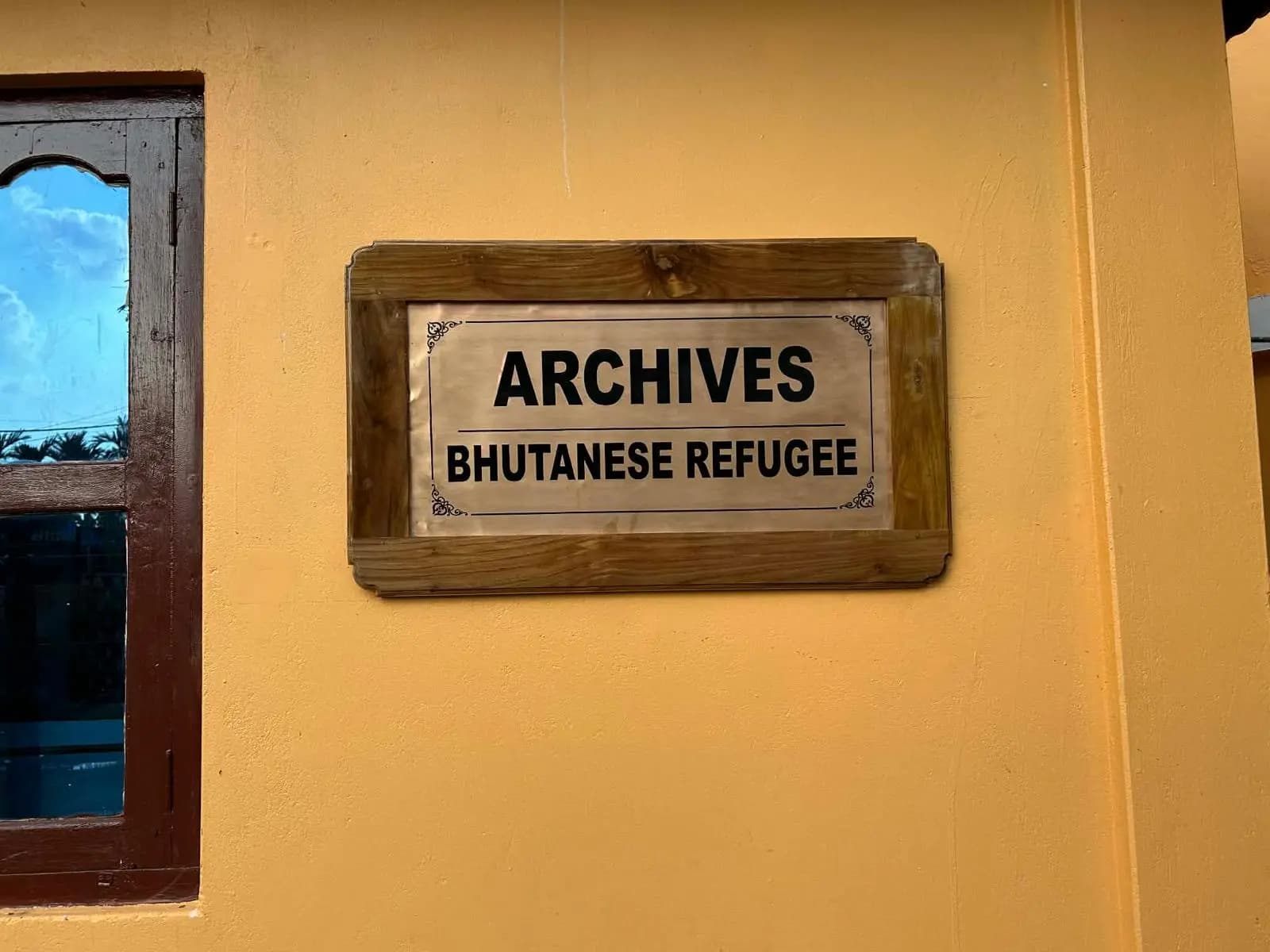
An Archive is built for storing publications, artifacts and documents related to Bhutan-Nepal relation and Bhutanese refugees. The Archives is housed within Bhutanese Refugees' Historical & Cultural Complex (BRHCC) which is built adjacent to Laximinarayan Devasthan, Dhaijan-11, about 11 kilometers from the Kakarivitta outpost along the Mechi-Mahakali King Mahendra Highway.
The Bhutan-Nepal Archives stores scholarly books, articles, government publications, refugee publications, newspaper cuttings, trade statistics related to the Kingdom of Bhutan and Nepal. It also contains refugee artifacts, refugee documentation, chronological event diaries, and visual records and data storage. The Archives aims to become the referral center for scholars working on Bhutan-Nepal relationship and Bhutanese Refugee issue.
The Bhutan-Nepal foundation (BNF) would own the Archive eventually. The BNF, which is at the formative stage, would have a committee comprising seventeen members, five each from among the citizen of Bhutan, Nepal and Non-resident Bhutanese (NRB) community and two nominated by the management of BRHCC, which is currently owned by Dr DNS Dhakal. Eventually, the archives will have its own management team from among the experts drawn from academic, diplomatic and cultural fields.
Academic books, research papers, and scholarly publications on Bhutan, its history, and the refugee crisis.
Documents, newsletters, and publications produced by refugee organizations during and after the camps.
Newspaper clippings, media coverage, and press releases documenting key events and advocacy milestones.
Campaign documents, protest records, petitions, and materials from human rights advocacy efforts.
Statistical records, census data, and demographic information on the refugee population over decades.
Rare physical artifacts, photographs, personal documents, and memorabilia from the refugee experience.
The Foundation maintains efficient studios and apartments that researchers and spiritual practitioners may rent for short-term residence. Scholars seeking to access the archive for research purposes are welcome to contact us.
Our archive supports academic research, documentary projects, educational initiatives, and efforts to document and preserve the history of Bhutanese refugees.
Inquire About Access
Whether through membership, volunteer work, or supporting our initiatives, your involvement helps us honor the past while building bridges for the future.