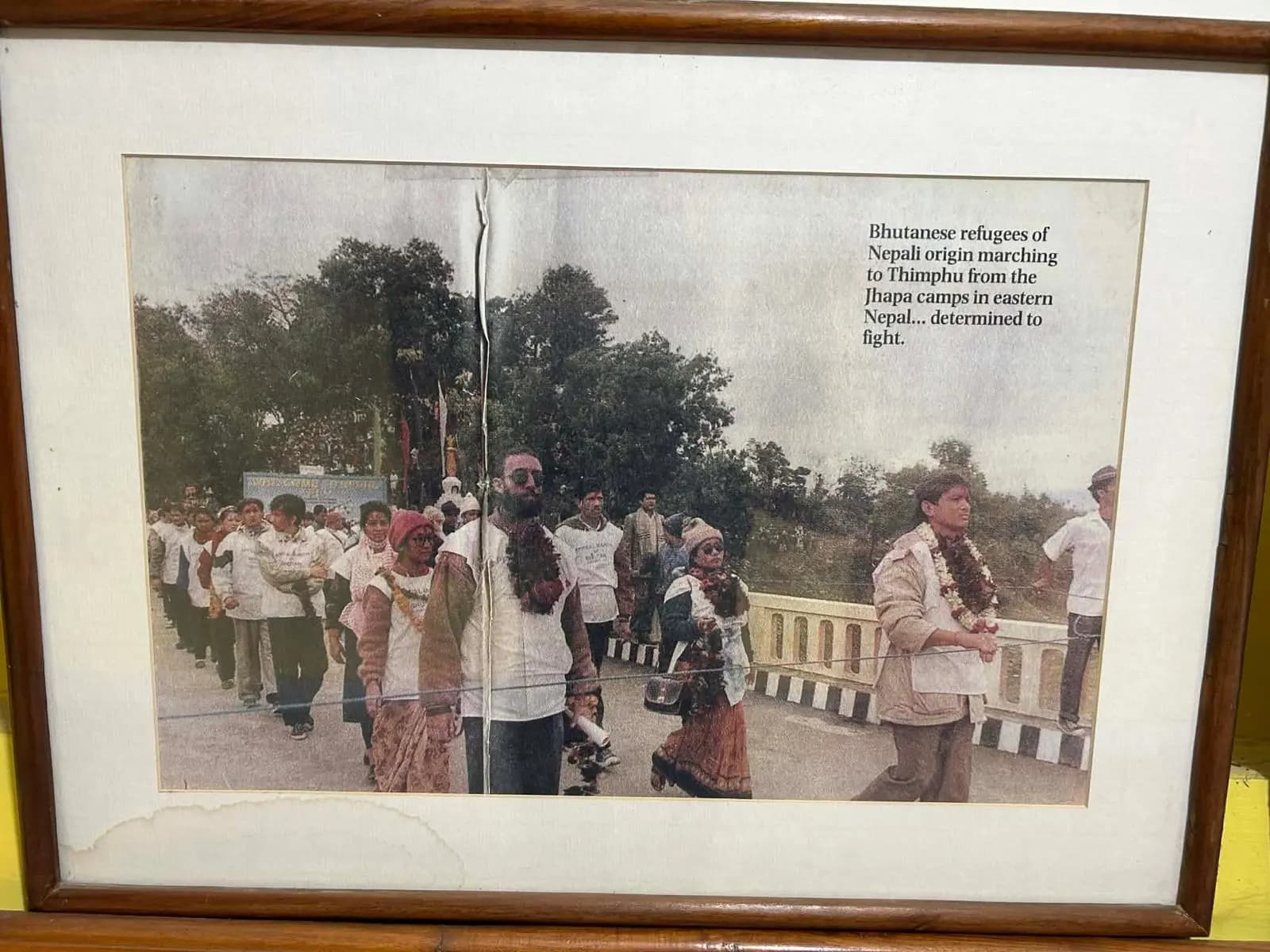
Establishing truth through research, documentation, and credible publications.
The third pillar is refugee advocacy and national reconciliation—working to establish truth on the refugee episode through research and credible publications. Truth is essential for reconciliation.
A number of social and political organizations championed the cause of human rights and democracy in Bhutan from 1990 until the start of the third-country resettlement program in 2008. Many of these organizations have since been dissolved, while others have become dysfunctional. Nevertheless, the struggle to counter government propaganda will remain an important part of the history of the Lhotsampa refugees.
Some of the key advocacy platforms included the Bhutanese Coalition for Democratic Movement (BCDM), Appeal Movement Coordinating Committee (AMCC), Bhutanese Refugee Representative Repatriation Committee (BRRRC), Bhutanese Refugee Aiding the Victims of Violence (BRAVVE), Human Rights Organization of Bhutan (HUROB), and the People's Forum for Human Rights in Bhutan (PFHRB). Political parties such as the Bhutan National Democratic Party (BNDP), Bhutan People's Party (BPP), and Druk National Congress (DNC) have remained largely inactive in exile, leaving refugee-based social groups to advocate for the repatriation of approximately 7,000 refugees seeking national reconciliation.
The Europe-based Global Campaign for the Release of Political Prisoners in Bhutan (GCRPPB), under the leadership of Mr. Ram Karki, has actively engaged with the UN Human Rights Commission in Geneva, Switzerland, and has lobbied the European Parliament in Brussels, Belgium. Several faith-based organizations have focused on meeting the spiritual needs of the dispersed diaspora in resettlement countries, though they have had limited influence in refugee camps or within Bhutan.
The Bhutan Vaidic Sewa Samitee, established in 1992 to campaign for the religious freedom of the Lhotsampa people, has remained largely dormant. Bhutan adopted a written constitution in 2008, granting limited religious freedoms to minority Hindu Lhotsampas; however, it has not reinstated the teaching of the Nepali language in schools.
The Nepali Bhasa Parisad, Bhutan (NBPB), formed in the refugee camps in 1993 to advocate for the promotion of the Nepali language in Bhutan, is no longer active beyond the resettled Bhutanese community. Although it has been renamed the Literature Council of Bhutan (LCOB), it has yet to develop a coherent advocacy program among regional literary groups to promote the cultural rights of the Lhotsampa people in Bhutan.
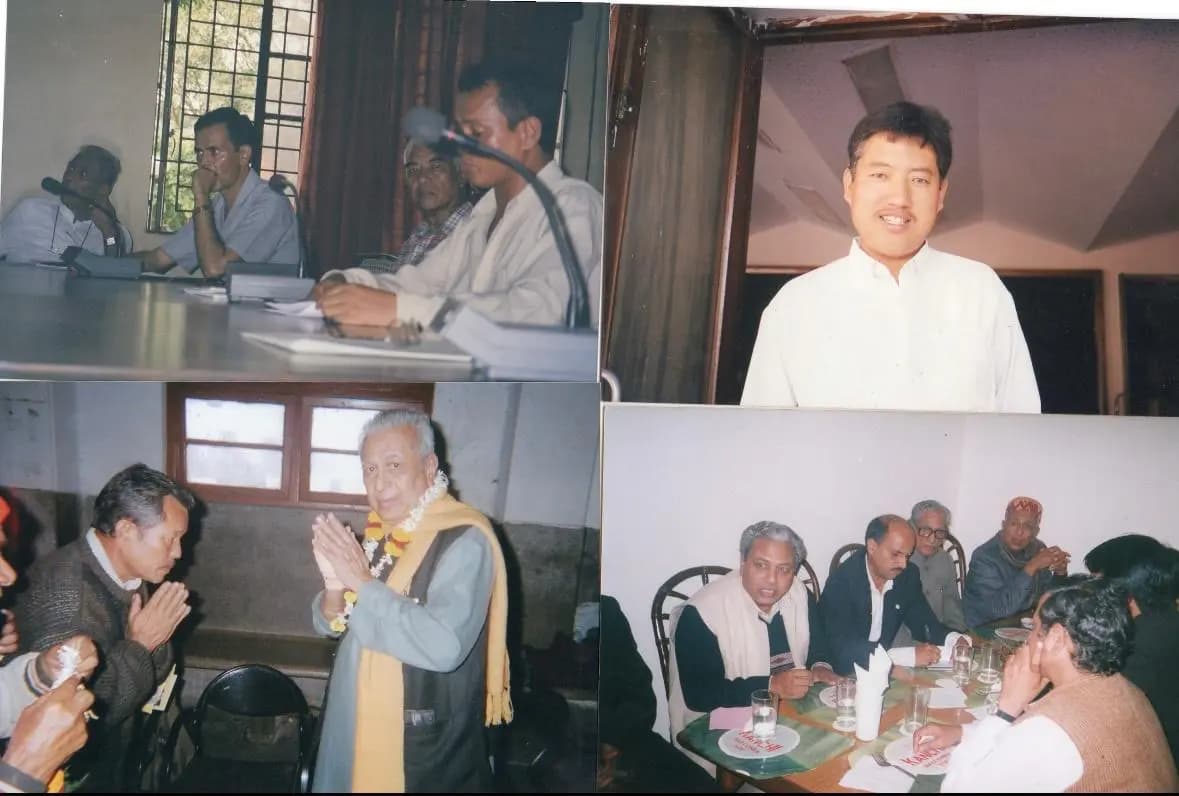
Historical photographs from advocacy efforts
Acknowledging the truth is essential for any amicable solution. Without truth, there can be no lasting peace.
Documenting history and lived experiences helps build trust and creates space for meaningful conversation.
Working toward healing and understanding between all parties affected by the refugee crisis.
Engaging in constructive diplomacy grounded in human rights and respect for all stakeholders.
Independent research to document history and lived experiences, building a foundation of truth for meaningful dialogue.
Producing well-researched publications that inform policy and support evidence-based solutions to the refugee issue.
Convening national and regional platforms for constructive dialogue grounded in human rights and dignity.
Engaging with policymakers and international bodies to advocate for just and sustainable solutions.
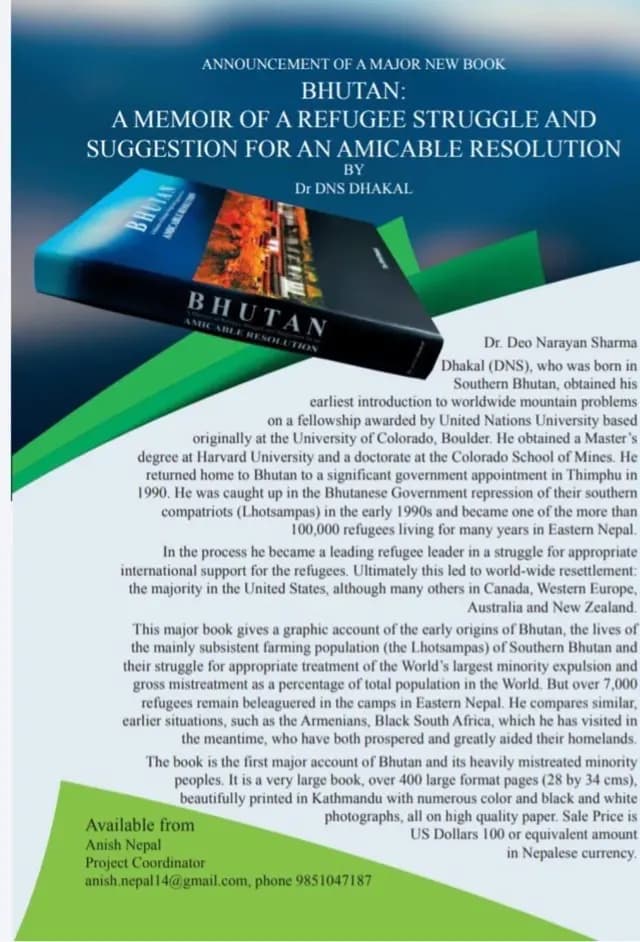
By Dr. D. N. S. Dhakal, PhD
This comprehensive book documents the Bhutanese refugee experience and offers suggestions for an amicable resolution. The long-term management structure and ownership of the Foundation's facilities are also described within its pages.
Photographs, statements, and publications related to Bhutanese refugees, advocacy, and Bhutan–Nepal relations are shared on this website. Once published, the content becomes the property of the Bhutan–Nepal Foundation.
View All PublicationsThe work of documentation, research, and advocacy requires sustained commitment. As a member of the Foundation, you can contribute to preserving truth and advancing reconciliation for the Bhutanese community.

Whether through membership, volunteer work, or supporting our initiatives, your involvement helps us honor the past while building bridges for the future.