Nepal and Bhutan are ancient neighbors, sharing more than 1,200 years of continuous history. It is believed that Guru Padmasambhava journeyed to Bumthang Valley in central Bhutan after completing his meditation at Halasi Mahadev Cave in Khotang District of central Nepal.
According to tradition, he traveled through the Phalaylung Pass in eastern Nepal into present-day Samchi District of Bhutan, making a brief stop at Bukay Dam in the Phuentsholing area. From there, he continued onward through Kalikhola, Sarbhang, Maugau, Kharkhola, and Nobji-Kharphu, eventually reaching Bumthang Valley via present-day Trongsa District. Along this historic route, stone imprints believed to mark his brief stay can still be found, and they are worshiped as Madevthan by the Lhotsampa people.
While people-to-people exchanges continued for centuries on religious and cultural grounds, formal state-to-state relations began in 1616 AD during the time of Shabdrung Nawang Namgyal, the founding father of Bhutan, and Shri Ram Shah, the King of Gorkha in central Nepal. Although the formal migration of Nepalis started during the time of Shabdrung Rinpoche, large-scale migration was later encouraged by British India following the signing of the Treaty of Sinchula in 1865 AD. In 1903, three prominent members of the Nepali community from the Chirang and Samchi areas were included in a delegation led by Kazi Ugyen Dorji to seek recognition from the Nepali Durbar for the establishment of the Wangchuck Dynasty in 1907 AD.
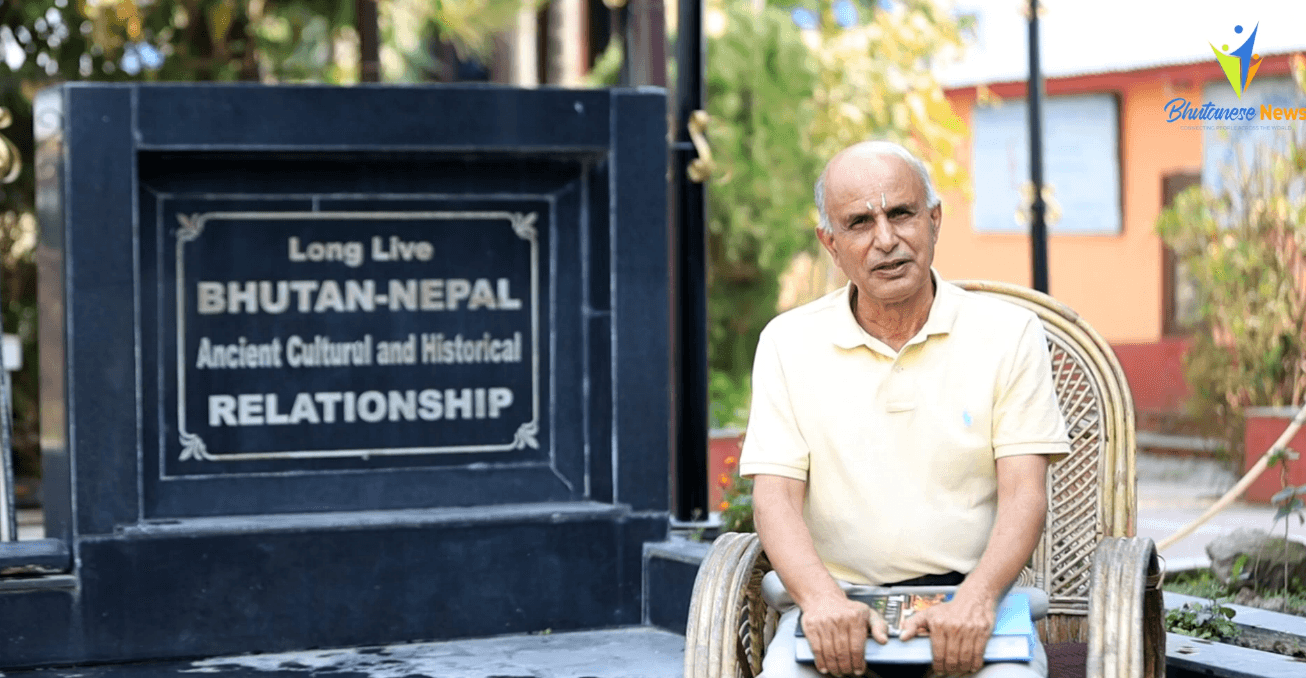
Recent political developments in both Bhutan and Nepal have disrupted this ancient historical and cultural relationship, underscoring the need for renewed efforts to strengthen ties through inter-country cultural programs, cultural tourism, and the promotion of trade and commerce. Nepal and Bhutan share a religious landscape shaped by hill Hinduism blended with Tantric Mahayana Buddhism, providing a strong foundation for meaningful interfaith dialogue. In this context, visits to Hindu temples and Buddhist monasteries in both countries carry cultural as well as spiritual significance.
Bhutan and Nepal have supported each other during difficult times. In 1964, Bhutan’s Acting Prime Minister, Lhendup Dorji, sought political asylum in Nepal along with several high-ranking Bhutanese officials following the assassination of Prime Minister Jigme Palden Dorji. King Mahendra of Nepal advised him not to engage in activities harmful to the Bhutanese monarchy. Lhendup Dorji later returned to Bhutan during the coronation of the Fourth King, Jigme Singye Wangchuck, in 1974.
The Fourth King, Jigme Singye Wangchuck, shared a close personal rapport with King Birendra Bir Bikram Shah Dev of Nepal. The Bhutanese King visited Nepal on several occasions, either to attend SAARC Summits or for pilgrimage. King Jigme Khesar Namgyel Wangchuck was born at Patan Hospital in Lalitpur Municipality, and his chosen protective deity is Harati (Harithima), who is worshiped daily at Swayambhunath in Kathmandu for the well-being of the King. Informal channels of communication also existed between the two monarchs, with messages often exchanged through religious institutions and trusted individuals.
The eruption of the mass protest movement in southern Bhutan in 1990, followed by the creation of the refugee crisis, strained the previously cordial relationship between Bhutan and Nepal. Relations deteriorated further after the abolition of the monarchy in Nepal in 2008.
Intervention by the international community to resolve the two-decade-old Bhutanese refugee crisis led to the third-country resettlement of more than 100,000 Bhutanese refugees in the United States, Canada, Australia, New Zealand, and several European countries. The resettled Bhutanese community has the potential to serve as a strong lobbying group for Bhutan during times of need. However, this would require Bhutan to restore their lost Bhutanese identity by establishing a mechanism to recognize them as Non-Resident Bhutanese (NRB).
The NRB community can serve as an important bridge in rebuilding the Bhutan–Nepal relationship, underscoring the need to establish a non-governmental institution in the form of the Bhutan–Nepal Foundation. The foundation could include founding members from Bhutan, Nepal, and the Non-Resident Bhutanese community. It could undertake initiatives that governments may find difficult to pursue, particularly in promoting people-to-people relations. Today, Bhutan and Nepal are well connected by the four-lane Asian Highway, which links Kakarbhitta with Phuentsholing via Siliguri in North Bengal, India.
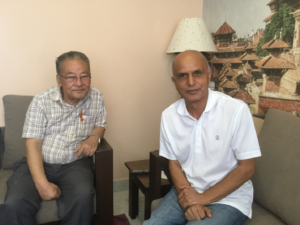
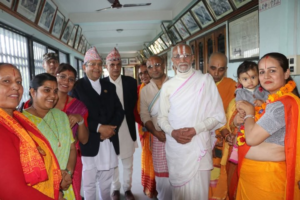
Nepalese diplomat Hiranyalal Shrestha visited the Bhutanese Refugee Museum Complex and strongly supported the concept of the Bhutan–Nepal Foundation as a means of advancing people-to-people relations into the future. A longstanding friend of Bhutan and the Bhutanese refugees, he reportedly visited Bhutan in 1971 and 1974 as a journalist, and later as a member of a parliamentary delegation in 1998. Speaker of the Nepalese Parliament Devraj Ghimire visited the Bhutanese Refugee Historical and Cultural Complex in December 2024 and highlighted its potential role in strengthening bilateral cooperation between Bhutan and Nepal.
There are many areas in which the Bhutan–Nepal Foundation could make meaningful contributions. The most important include promoting people-to-people contact, encouraging religious tourism, and facilitating the exchange of ideas on business and economic development. There is also a pressing need to preserve the history of the Bhutanese refugees in eastern Nepal, where they spent more than two decades in camps and endured the loss of friends and relatives.
The need of the hour is to establish a non-governmental institution that can promote people-to-people engagement in a relaxed and constructive environment, while undertaking the task of rebuilding Bhutan–Nepal relations on a solid foundation. Achieving this goal will require clear vision, strategic lobbying, and quiet diplomacy to restore the strength and goodwill that characterized Bhutan–Nepal relations before the establishment of the modern-day nation-states.